




How to Spot Pure Coconut Oil (And Why NMDC's Copol Passes Every Test)
Walk into any grocery store in Kerala and you'll find a dozen coconut oil brands lined up on the shelf, all promising "100% pure." But not all of them live up to that claim. With adulteration on the rise, knowing how to identify pure coconut oil isn't just a kitchen skill anymore, it's a health necessity. Here's a simple, no-nonsense guide to help you tell the real thing from the rest and why Copol, NMDC's coconut oil, consistently checks every box.
1. The Smell Test
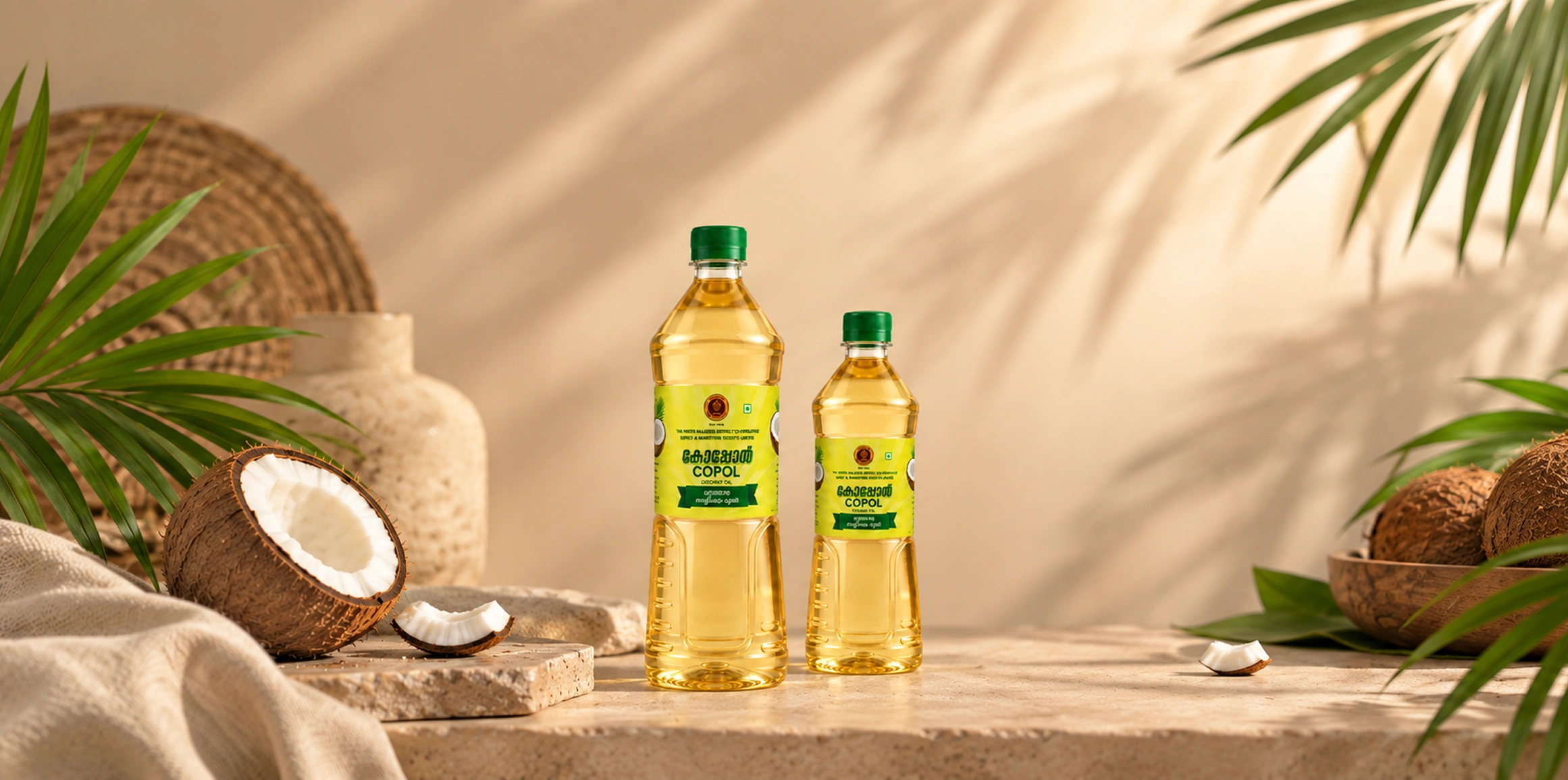
Pure coconut oil has a mild, natural coconut aroma, not overpowering, not artificial. If the oil smells rancid, overly sweet or oddly perfumed, it's likely mixed with lower-grade oils or synthetic fragrances added to mask poor quality. Copol's oil is cold/hot-pressed from fresh, farm-sourced copra, retaining a clean, authentic coconut scent with no additives needed to make it smell "right."
2. The Solidification Test
This is one of the easiest checks you can do at home. Pure coconut oil solidifies below 24–25°C (typical room temperature during Kerala winters or in a fridge) and turns back to liquid when warmed. Adulterated oil, especially when mixed with palm oil or mineral oil, often stays semi-solid, grainy or doesn't solidify evenly.
Try this: Refrigerate a small amount for 30 minutes. Pure oil turns uniformly white and solid. If you see layering, separation or uneven texture, that's a red flag.
3. The Texture & Colour Check
Pure coconut oil, in its liquid state, is clear and colourless, almost like water. A yellowish tint often signals oxidation, poor refining or blending with cheaper oils. In its solid state, it should look smooth and uniformly white, not chalky or streaky.
4. The Taste Test
Pure coconut oil should taste subtly sweet and nutty, without any bitterness, sharpness or chemical aftertaste. If it tastes flat, artificial or leaves an odd aftertaste on the tongue, the oil has likely been blended or over-processed.
5. Check for FSSAI and AGMARK Certification
This is the most reliable, non-negotiable check. Every genuine edible coconut oil brand in India should carry:
- FSSAI License Number — confirms the product meets India's food safety standards
- AGMARK Certification (where applicable) — indicates quality grading, especially relevant for coconut oil sourced under agricultural produce standards
Always check the label for these marks along with a valid batch number and manufacturing or expiry date. If a brand skips these details, it's worth skipping the brand. Copol is FSSAI-compliant, with full batch traceability, because trust isn't something you print on a label, it's something you build into the process.
Why Copol Passes Every Test
At NMDC, quality isn't a marketing checkbox, it starts at the farm. Our copra is sourced directly from local farmers, processed under strict hygiene standards and tested at every stage before it reaches your kitchen. No shortcuts, no unnecessary additives, just coconut oil the way it's meant to be. The next time you shop for coconut oil, run these five checks. And if you're looking for oil that passes them all without a second thought, that's exactly what Copol is made for.
Frequently Asked Questions
1. How can I check coconut oil purity at home without lab tests?
The smell test, solidification test and taste test are simple, reliable ways to check purity at home. Pure coconut oil solidifies below 24–25°C, has a mild coconut aroma and a subtly sweet taste with no artificial aftertaste.
2. Does coconut oil solidifying mean it's pure?
Solidification is a strong indicator but not the only one. Pure coconut oil solidifies uniformly and turns liquid again when warmed. Always combine this with a smell and label check for accuracy.
3. What does FSSAI certification on coconut oil mean?
FSSAI certification confirms that the product meets India's official food safety and quality standards, covering hygiene, processing and labelling requirements.
4. Is refined coconut oil the same as pure coconut oil?
Not quite. Refined oils go through additional processing and may include bleaching or deodorizing steps. Cold or hot-pressed coconut oil, like Copol, retains more of its natural aroma, taste and nutrients.
5. Why is Copol coconut oil considered pure?
Copol is sourced directly from local farmers, processed under FSSAI-compliant standards and made without unnecessary additives, ensuring the natural aroma, taste and quality of authentic Kerala coconut oil in every bottle.